
CUSMA Explained: What Changed After NAFTA
The Canada-United States-Mexico Agreement replaced NAFTA in 2020. Here’s what actually changed for Canadian businesses and consumers.
Read MoreCanada isn’t just exporting — it’s part of complex international supply networks. Learn how disruptions abroad affect Canadian businesses and jobs.
When a semiconductor shortage hit Asia in 2021, Canadian auto plants went quiet. When oil prices spike in the Middle East, Canadian energy companies adjust their strategies. We’re not isolated — we’re connected. Every day, Canadian businesses depend on materials, components, and markets that span continents.
Here’s what most people don’t realize: Canada doesn’t just participate in global supply chains. We’re a critical node. We produce raw materials that factories worldwide depend on. We process goods that get shipped globally. And we import finished products for Canadian consumers. It’s a constant flow of goods, money, and information.
Think of a supply chain like a relay race. One runner passes the baton to the next. Except here, the “baton” is a product moving through different countries and companies.
Let’s say you’re buying a car. The steel might come from Canada. The electronics get manufactured in Japan. Assembly happens in Mexico. Then it ships to a dealership in Toronto. That’s five different supply chain touchpoints across three countries. Add in shipping companies, customs brokers, insurance providers, and logistics coordinators — you’ve got dozens of players involved.
Canada’s role? We’re strong in raw materials — oil, metals, wood, agricultural products. We’re also crucial for refining and processing. Over 60% of Canadian exports are either raw materials or processed goods. That means we’re early in many supply chains, providing the foundation that other countries build upon.
Our largest trading partner by far. 75% of Canadian exports go to the U.S. under CUSMA (Canada-United States-Mexico Agreement). Disruptions there ripple back instantly.
We import manufacturing equipment and finished goods. When Asian supply chains tighten, Canadian retailers feel it within weeks. Dependency runs both directions.
Oil and natural gas exports anchor our economy. A single pipeline issue or price shift affects hundreds of Canadian businesses and thousands of workers.
Grains, canola, beef — Canada feeds the world. We’re in the top 5 globally for multiple agricultural exports. Weather and trade policies directly impact our supply.
We’re strong on raw materials. But here’s the problem — we don’t control much of what happens next. When oil leaves Canada, we lose control of pricing and distribution. When we export unrefined minerals, other countries profit from turning them into finished products.
That dependency works both ways too. We need imports for things we can’t make here. Semiconductors? Almost entirely imported. Consumer electronics? Mostly from Asia. This isn’t weakness — it’s reality. But it means Canadian businesses are vulnerable to shocks they can’t predict or prevent.
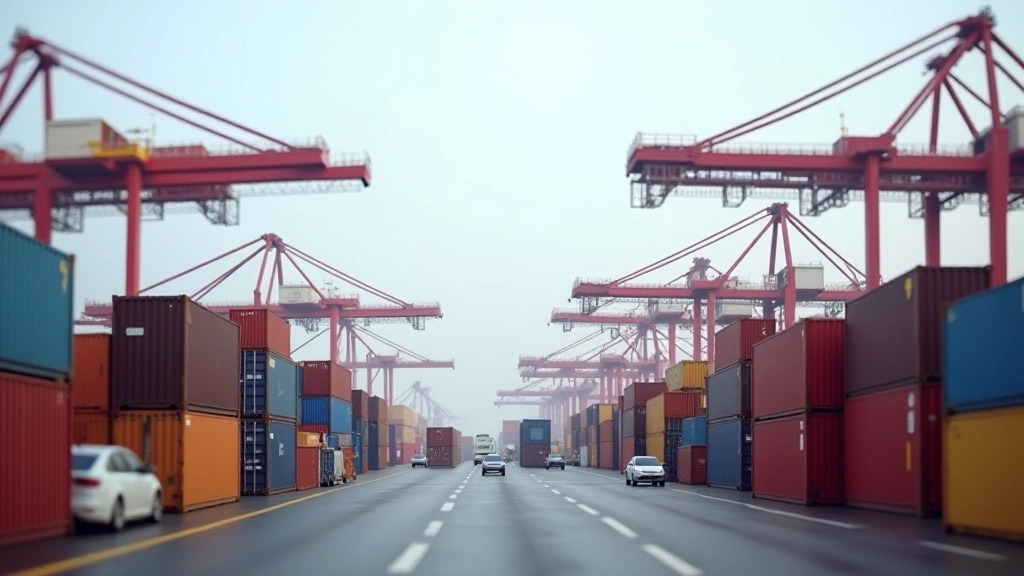
The 2021-2022 period showed us exactly how fragile these connections are. Port closures in China. Shipping container shortages. Rising freight costs. These weren’t Canadian problems initially, but they became Canadian problems within months. A shortage in Taiwan meant empty shelves in Toronto.
Canadian jobs depend directly on exports. That’s 1 in 6 workers.
Annual trade with the U.S. alone. A 5% disruption costs $3 billion in economic activity.
Of Canadian manufacturing depends on imports for parts and materials. We can’t make anything without global connections.
When supply chains break, it’s not abstract. It’s a worker at a parts plant facing temporary layoffs. It’s a retailer explaining why products are out of stock. It’s a consumer paying more because freight costs tripled. It’s a farmer unable to export grain because shipping is booked months out.
Companies are rethinking their strategies. “Just-in-time” manufacturing — where inventory arrives exactly when needed — is being replaced with “just-in-case” thinking. Businesses want buffers. They’re diversifying suppliers instead of relying on single countries.
This creates opportunity for Canada. We’re reliable, stable, and geographically positioned between major markets. Some manufacturing is already moving closer to North America. But it requires investment in infrastructure, workforce training, and technology.
CUSMA gives us a framework, but trade isn’t guaranteed. Tariffs, political shifts, and economic recessions reshape everything. Canada’s challenge: stay competitive, stay relevant, and build resilience into our supply chains.

Canada’s position in global supply chains is both strength and vulnerability. We’ve got resources the world needs. We’ve got logistics expertise. We’re stable and reliable. But we’re also dependent on others, and we don’t control what happens beyond our borders.
Understanding this matters. Whether you’re a business owner planning inventory, a worker in a trade-dependent industry, or just someone interested in economics, supply chains affect you. They determine what’s available, what it costs, and whether companies can afford to hire.
The next major disruption is coming — it always does. How Canada responds, how our companies adapt, and whether we invest in resilience will determine whether we thrive or struggle through it.
This article provides educational information about Canada’s role in global supply chains, trade agreements, and international economic relationships. The statistics and examples reflect general economic patterns and are intended to help readers understand how supply chains function. For specific investment, business, or policy decisions, consult with relevant professionals or government resources. Trade policy and supply chain dynamics change regularly, so readers should verify current information from official sources like Statistics Canada, Global Affairs Canada, or the Canadian International Merchandise Trade Database.